

We put a question out into the world recently.
"Can taste be made?"
The responses were exactly what we expected; and nothing like what we expected.
Some people said yes, immediately, confidently. Of course taste can be built. You travel. You read. You surround yourself with beautiful things and difficult ideas and people who challenge you.
Some said no. Taste is instinct. You either see it or you don't. No amount of exposure turns someone into a person with a point of view.
And some, the most interesting ones, paused. And said: it depends on what you mean by taste.
That pause is what this is about.
What Are We Actually Talking About When We Say "Taste"?
Taste is one of those words that sounds simple until you try to define it.
It's not the same as preference. Preference is easy; I prefer gold to silver, I prefer minimalism to maximalism, I prefer quiet rooms to loud ones. Preference is just a list. Anyone has a list.
Taste is something else. Taste is the why behind the preference. It's the internal compass that orients you without a map. It's knowing, instinctively, that something is slightly off; the proportion, the weight, the combination; even when you can't fully articulate why.
Philosophers have been arguing about this since at least 1757, when David Hume wrote that aesthetic judgment is neither purely subjective nor purely objective; not just personal preference, but not a mathematical fact either. He called it a trained sensibility: something refined through exposure and comparison, capable of discerning qualities that careless observers miss.
A trained sensibility. Not a gift. A practice.
That distinction matters enormously.

The Case That Taste Is Made
Here is the argument for taste as a built thing, and it's a strong one.
Think about what consistently separates people who seem to have remarkable taste from those who don't. It's almost never raw intelligence or wealth or even access. It's attention. It's the accumulation of a specific kind of looking, listening, touching, noticing; done repeatedly, over time, across many different contexts.
The sociologist Pierre Bourdieu called taste a form of cultural capital: a competence built through immersive exposure to aesthetic traditions. His insight was sharp and slightly uncomfortable; taste is not something you're born with. It is something you accumulate. And like any form of capital, it confers advantage to those who have it and is often invisible to those who don't.
There's something liberating about this, if you sit with it. It means taste is not reserved for a class of people, or a type of upbringing, or a particular education. It is available to anyone willing to do the work of looking carefully.
Travel sharpens it. So does learning a craft; any craft. So does spending time with things that confuse you before they delight you. So does repeatedly asking yourself why you're drawn to something rather than just accepting that you are.
One image that has stayed with us: someone forced to learn piano who initially despises it, who struggles through it for years; and then one day finds they cannot stand a wrong note. Cannot tolerate sloppy playing. Has developed, without willing it, a standard they will spend the rest of their life holding things to. They didn't choose that standard. It was built into them through practice.
That is taste. Made.
The Case That Taste Is Innate
And yet.
There are people who seem to arrive with it. Children who arrange objects on a table with an intuitive sense of balance nobody taught them. People who walk into a room and immediately feel what's wrong with it before they can name it. Designers who produce extraordinary work with no formal training.
There's a neurological dimension here too. Research in neuroaesthetics has shown that the experience of beauty activates the brain's reward systems; the same regions implicated in pleasure, recognition, rightness. This is not learned. It is felt. And it happens faster than thought.
Some people's aesthetic receptors simply fire more readily. Some people are wired to register proportion, tension, harmony, discord; more acutely than others, with less training required.
This doesn't mean taste is fixed. But it might mean that the starting point varies. That some people have a natural sensitivity; a lower threshold for noticing, that others have to work harder to develop.
The poet or the musician who, the very first time they hear something, knows. That's not education. That's something else.
What We Actually Think
Both things are true. And the tension between them is the interesting part.
Taste is partly native; a sensitivity, an attunement, something closer to an instinct than a decision. And taste is partly built, through deliberate exposure, through developing standards, through the long, slow accumulation of encounters with beautiful and ugly things and learning to tell the difference.
What makes taste feel rare is not that it's mysterious. It's that most people stop at preference. They find what they like and stay there. They don't push through the discomfort of things they don't yet understand. They don't seek out the reference points that would expand their range. They mistake familiarity for taste, when familiarity is actually taste's enemy.
Real taste requires you to be uncomfortable sometimes. To be confused by something and stay with it anyway. To choose the thing that challenges you slightly over the thing that flatters you completely.
That is a discipline. And disciplines can be cultivated.
What This Has to Do With Jewelry
Everything. And nothing. And everything.
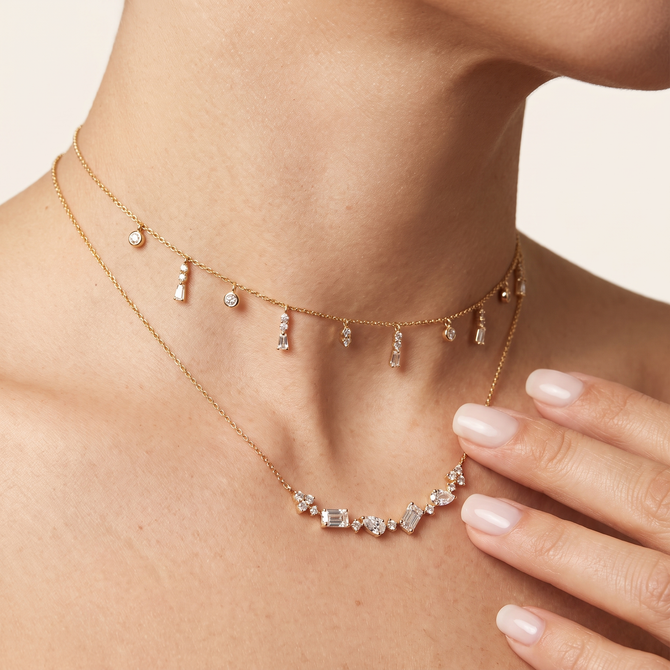
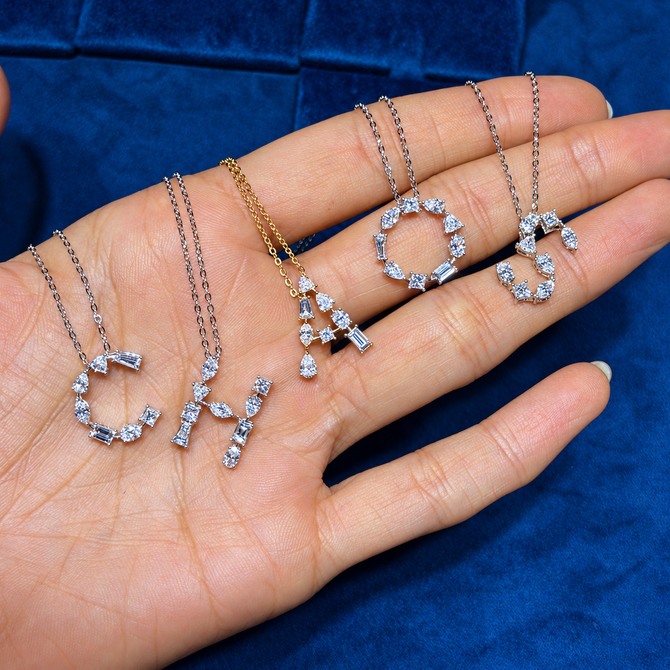
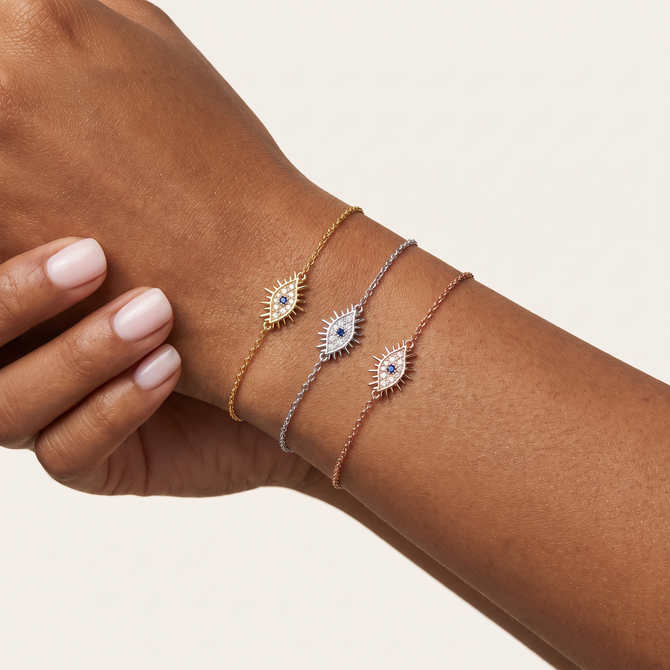
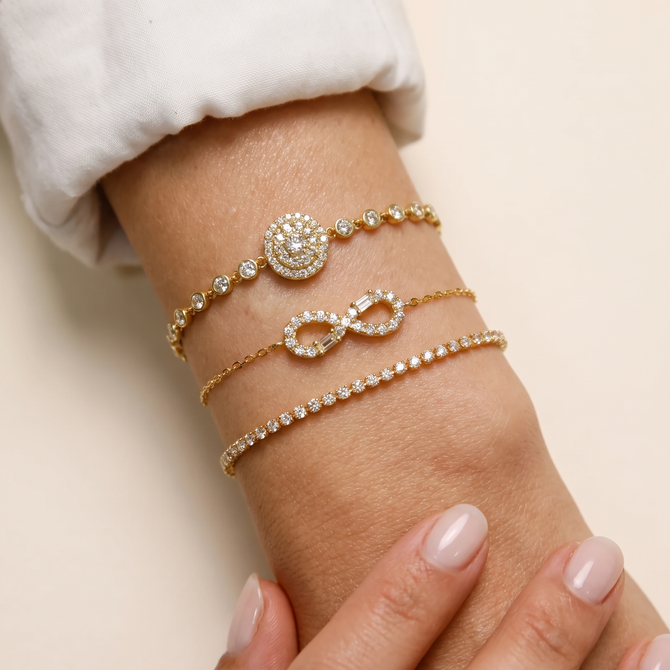
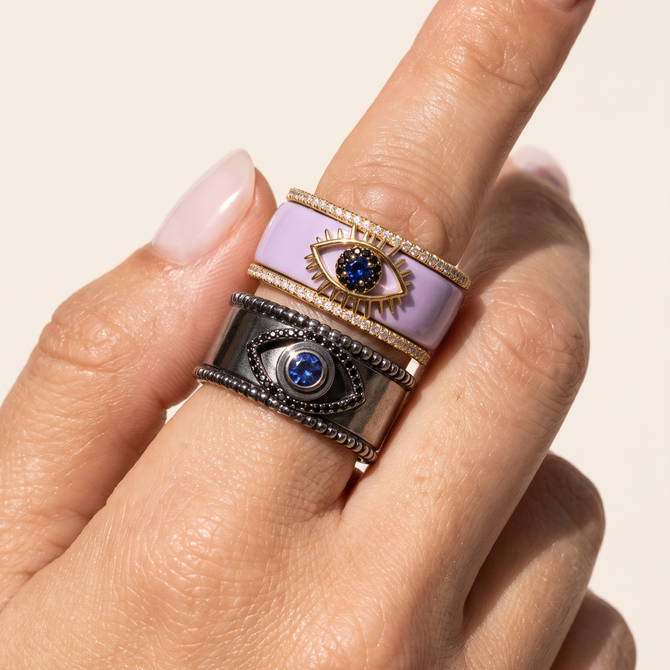
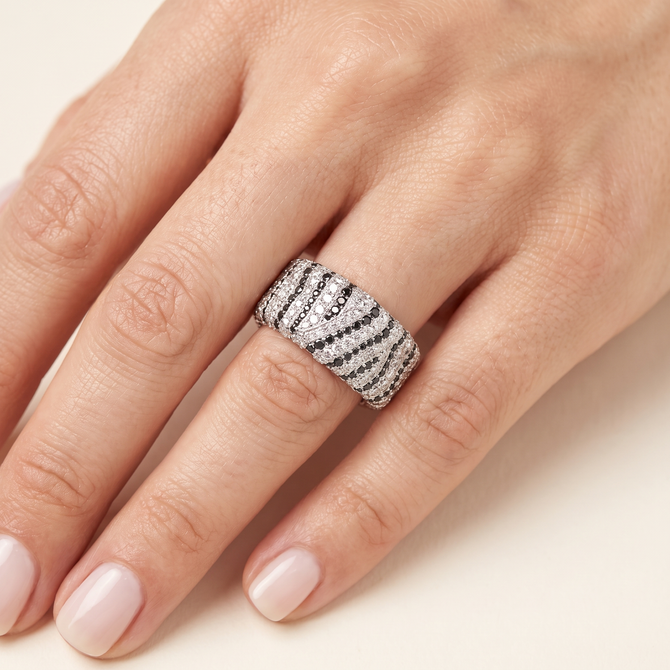
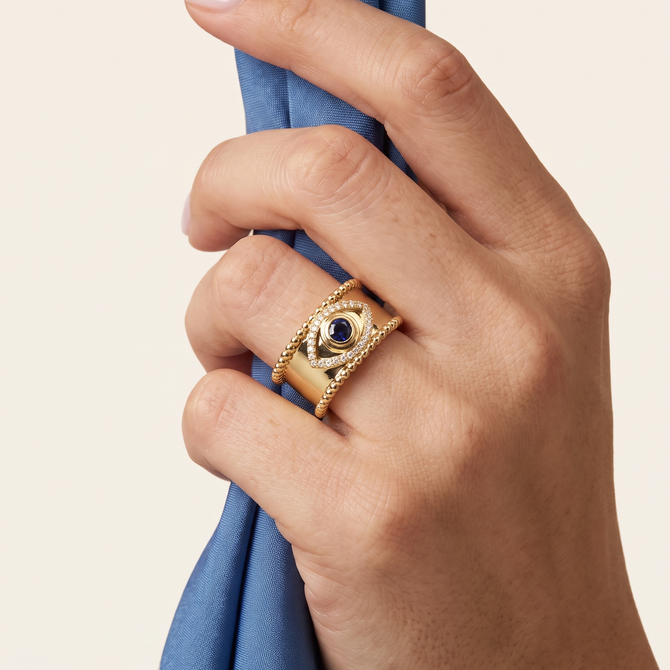
Jewelry is one of the oldest human expressions of aesthetic judgment. Before architecture, before painting, before fashion as we know it, there were people adorning themselves. Making choices about what to put on their bodies. Communicating something about who they were, or who they wanted to be, through the objects they chose to carry.
The choices people make about jewelry are almost never random. They are a composite of everything we've been talking about: innate sensitivity, accumulated exposure, developing standards, personal history, things seen on other people that lodged somewhere and never left.
Some people buy jewelry the way they buy anything; because it's there, because it's on sale, because someone else seemed to like it. That's preference.
Some people develop a point of view. They know the weight they want on their wrist. They know the exact proportion of stone to setting that feels right to them. They know when something is trying too hard. They know the difference between jewelry that performs luxury and jewelry that is luxurious.
That knowing is taste. And it is built; through looking, wearing, returning things, making mistakes, trying on things in stores with no intention of buying, studying the wrists and necks of women whose style you admire and asking yourself what exactly it is that works.
It is made. Deliberately. Over time. Piece by piece.
The Question We're Really Asking
When we asked can taste be made, we weren't really asking about aesthetics.
We were asking something more personal.
Can you become someone with a stronger point of view? Can you develop the confidence to know what you want and stop second-guessing it? Can you outgrow the tendency to follow what's trending and arrive at something that is genuinely yours?
We think yes. We think that is the whole project, actually.
And we think the women who end up with truly extraordinary personal style; in how they dress, how they live, what they choose to wear and carry and put on their body, are not the ones who were born with it.
They're the ones who paid attention.
For a long time.
Until it became instinct.
The Future Belongs to Her
The jewelry industry is continuing to evolve. We’ll see more immersive virtual styling, smarter AI curation, deeper personalization, and even stronger integration between social discovery and seamless purchase.
But the thread running through all of it will remain the same.
A woman, somewhere, falls in love with a piece that feels like *her*. She saves it. She returns to it. She imagines it in her life. And then, on her timeline, at her pace, she makes it hers.
Technology facilitates that journey.
Algorithms suggest options.
Brands like Psylish try to make it beautiful at every step.
But the decision?
That is entirely, completely, powerfully hers.


