

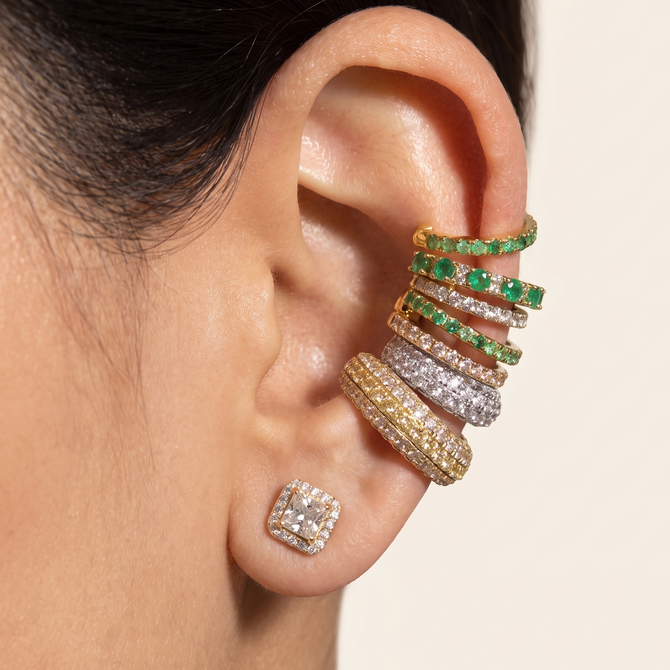
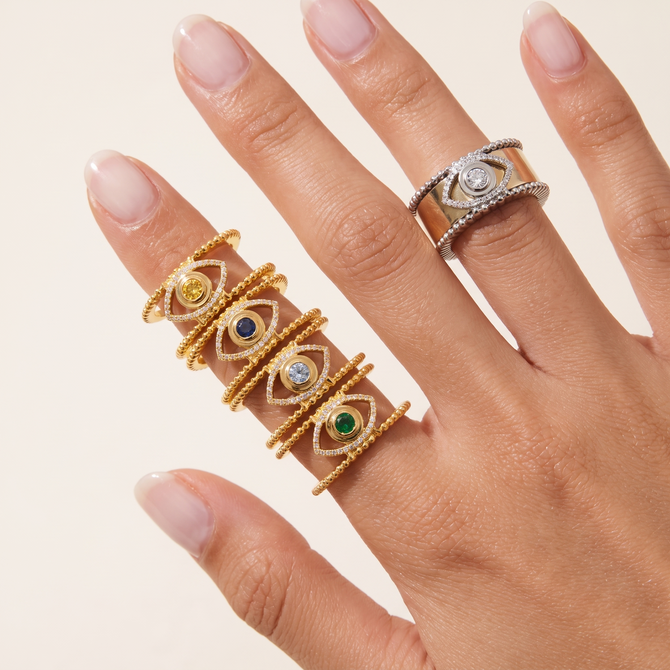
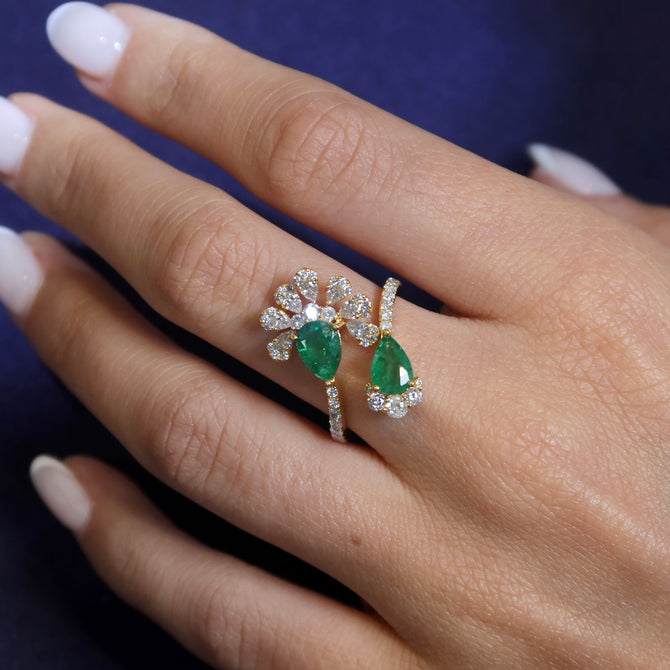
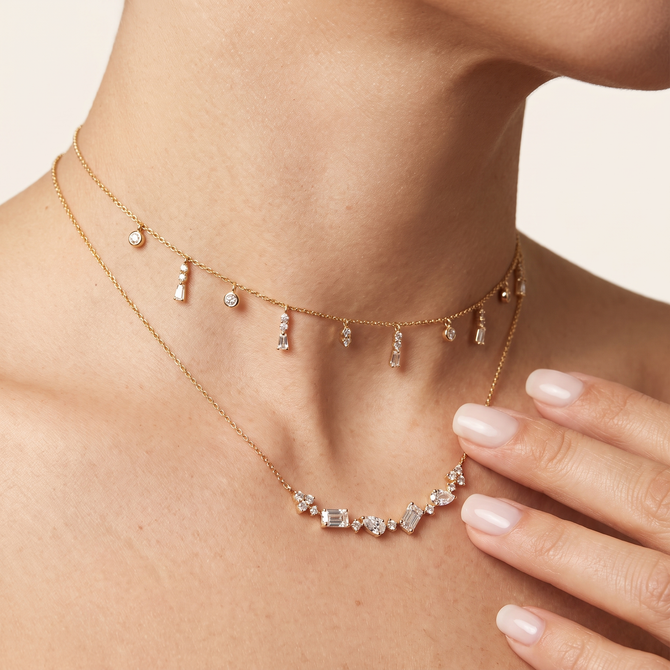

I want to start with something most jewellery brands won't say: cutting out the middlemen doesn't mean jewellery becomes free to sell. It means the money moves somewhere else.
I built PSYLISH to remove the traditional retail chain; the distributors, the retail buyers, the flagship leases, the sales commissions baked into every price tag. That part is true, and it's the reason our prices look the way they do. But I'd be lying if I told you that meant we had no costs. We have different ones. And the biggest one, by far, is reaching you in the first place.
This is that story; as honestly as I can tell it.
How Factory to Cart Jewellery Actually Works
What Traditional Retail Actually Charges You For
Before I get to what PSYLISH spends money on, it's worth being clear about what a traditional jewellery store is spending money on, because the two are genuinely different animals.
A ring that reaches a display case on Fifth Avenue or in the Dubai Mall has usually passed through a manufacturer, a wholesale distributor, a retail buyer, and finally a store — each one adding a margin before the piece is even priced for sale. Then there's the store itself: prime retail rent, in-house security, sales staff on commission, visual merchandising that changes every season. Then there's brand marketing at a scale most people don't think about — celebrity campaigns, print editorials, sponsored red carpet moments, permanent billboard placements in places like airport arrivals.
Industry data from 2025 and 2026 puts traditional fine jewellery markups at 300–800% on gold pieces, sometimes higher on branded diamond jewellery. That's not a scandal; it's a business model that funds an entire retail experience most people never question. But it means the stone and the craftsmanship are often a small fraction of what you're actually paying for.
We built PSYLISH to remove almost all of that. Manufacturer to customer, directly. No distributor mark-up, no store lease, no commission structure between us and you.
What We Spend Money on Instead
Here's the part most "factory direct" brands don't talk about: removing the traditional chain doesn't mean the cost of doing business disappears. It means it shows up somewhere else entirely; and for us, that's almost entirely in how we reach you.
A traditional jewellery house has decades of brand recognition and physical stores people walk past. We don't have that. Nobody stumbles onto PSYLISH on their way to lunch. Every single person who finds us, finds us because we worked to be found — and that costs real money.
Advertising. Running ads across every platform where our customers actually spend time — and constantly testing what works, because acquisition costs in jewellery are genuinely brutal. Fine jewellery has some of the lowest conversion rates in ecommerce, which means a lot of the marketing budget goes toward simply getting the right person to notice we exist.
Creative and content. Photography, video, campaign concepts, the kind of imagery that makes a $2,000 ring feel worth considering when you've never touched it in person. This is not cheap to produce well, and doing it badly costs us customers.
Partnerships and placements. Working with stylists, creators, and the occasional celebrity moment; not because it's glamorous, but because word of mouth in fine jewellery still starts with someone seeing it on someone else first.
Experiences. Pop-ups, events, the physical moments where people can actually hold a piece before buying online. These cost real money to run and rarely pay for themselves directly, but they build the trust that gets someone to buy a $2,000 ring from a brand they discovered on their phone.
Agencies and specialists. We work with people who understand performance marketing, brand strategy, and customer acquisition better than we could figure out alone. That expertise isn't free, and pretending otherwise would be dishonest.
None of this existed in the traditional model in the same way, because traditional jewellery houses relied on decades-old brand equity and physical foot traffic. We're building brand equity from scratch, in public, one customer at a time. That's expensive in its own way, just differently expensive.

Why I'm Telling You This
Because I think "no middlemen" gets oversimplified into "cheaper for no reason," and that's not honest. It's cheaper because we removed cost centres that added nothing to the actual jewellery; the flagship lease, the wholesale margin, the sales commission on a piece you found yourself online. It is not cheaper because running PSYLISH costs nothing. It costs plenty. It's just spent differently; on reaching you, rather than on convincing you once you've already walked through the door.
The honest version of "factory to cart" isn't that we've eliminated cost. It's that we've redirected it toward the things that actually matter to how you experience the brand — the product itself, and the effort it takes to reach you in a way that feels worth your attention.
What Stays Non-Negotiable
Whatever the cost structure looks like behind the scenes, three things don't move.
Natural diamonds, always. Not lab-grown, not simulated. Real stones, certified.
18K gold, done properly. Our solid gold pieces are solid all the way through — not plated, not vermeil — the kind that lasts and holds its value. And where we offer 18K gold plated pieces, like our Frey collection, we tell you plainly. No piece is ever mislabelled to seem like more than it is.
Craftsmanship that holds up to real life. Settings that don't loosen. Closures that work. Jewellery made to be worn every day, not stored away for occasions.

The Honest Version
We removed the traditional retail chain — the distributor, the retail buyer, the flagship lease, the sales commission. That part of the savings is real, and it's why our prices are what they are.
What replaced it is the cost of finding you; advertising, content, partnerships, the work of building a brand people trust without ever walking into a store. That's not a hidden cost. It's just a different one, and I'd rather tell you that directly than let "factory to cart" imply something that isn't quite true.
Either way, the diamond is real, the gold is solid, and the money goes into the jewellery and the work of reaching you — not into a lease on Fifth Avenue.


