


Something shifted on the red carpet this year. Diamonds didn't go anywhere; they never do — but the stone everyone kept reaching for was green. Deep, intentional, unmistakable green.
Emeralds are back. Except they never really left. They just waited until the rest of us caught up.
What Makes an Emerald an Emerald
An emerald is a green gemstone from the beryl mineral family; the same family as aquamarine, just with a more dramatic personality. The green comes from trace amounts of chromium and vanadium locked inside the crystal during formation, which is why no two emeralds are identical. Origin, geology, time — all of it shows up in the colour.
Hardness-wise, emeralds sit at 7.5–8 on the Mohs scale. Harder than glass. Softer than diamonds. Wearable every day, as long as you treat them like the fine jewellery they are and not like something you tap impatiently on a desk.
One thing nobody tells you upfront: almost every natural emerald has inclusions; tiny internal fractures that gemologists romantically call jardin (French for "garden"). It sounds like a problem. It's actually proof. A completely flawless emerald is so rare it should make you suspicious. The inclusions are the stone's fingerprint. They mean it's real.

Zambia vs. Colombia: The Debate Worth Having
The two most prestigious emerald sources in the world produce stones that look; and behave; very differently.
Colombian emeralds form in sedimentary black shales under low-iron conditions, which gives them their signature: bright, warm, vivid green. The classic. The one people picture when they say "emerald green." They carry centuries of reputation and a price tag to match; fine Colombian stones can reach $30,000 per carat.
Zambian emeralds form in metamorphic schists where iron is naturally present. That iron creates something distinct: a deeper, cooler, blue-green saturation that photographs extraordinarily well. They also tend to have fewer inclusions than their Colombian counterparts; meaning better clarity at comparable quality. They're the newer discovery (Zambia's Kagem mine is one of the largest emerald deposits ever found), but what they lack in centuries of reputation they more than compensate for in colour depth.
The honest verdict: if you want warmth and brightness, Colombia. If you want depth and intensity — the kind of green that looks alive in a photograph and electric in person — Zambia. The PSYLISH Frey collection uses Zambian stones specifically for that reason.
💚 Quick test: Hold your emerald to natural daylight. It should glow. If it looks better under store lighting than outside, ask more questions.

The Women Who Made Emeralds Mean Something
Cleopatra had Egyptian emerald mines that bore her name. She gifted the stones to visiting dignitaries as political statements. The woman understood branding before branding existed.
Elizabeth Taylor built one of history's most extraordinary jewellery collections around emeralds — a Bulgari suite from Richard Burton that later sold at Christie's for millions. She wore them like punctuation.
Fast forward to 2025: Priyanka Chopra Jonas wore a 241-carat Bulgari emerald at the Met Gala. At the Emmys, Parker Posey appeared in a necklace carrying a 45-carat pear-shaped emerald drop. Natasha Rothwell wore a David Webb diamond and emerald necklace that people are still talking about. Cynthia Erivo chose vintage Tiffany emeralds at the BAFTAs — deliberately, as a nod to her green-clad character in Wicked.
None of this is coincidence. Emeralds have always been worn by women who make decisions on purpose.
The Colour Is Everything
When buying an emerald, colour outranks everything else — size, setting, even clarity.
What you're looking for: medium to medium-dark tone, vivid saturation, pure green with a slight blue or yellow shift acceptable. Anything too light is green beryl (pretty, but not an emerald). Anything too dark looks black in dim light, which defeats the purpose entirely.
Saturation is the variable that separates a $300 stone from a $30,000 one at the same carat weight. A small, vividly saturated emerald will always outperform a large, flat one. Always.

How to Care for One Without Drama
Most emeralds are treated with oil or resin to fill surface fractures; standard practice, widely accepted, nothing to hide from. It means two things for care:
No ultrasonic cleaners. No steam. The heat and vibration disturb the treatment and can make inclusions more visible. Instead: warm water, a soft cloth, mild soap. Clean it like you'd clean something you actually care about.
Store it away from diamonds. Diamonds are a 10 on the Mohs scale. They will scratch your emerald without trying.
Why Right Now
Green has had a sustained cultural moment since at least 2023; Bottega Veneta's signature shade became a shorthand for a certain kind of considered taste, and the Wicked era pushed it into every room. But trends explain the timing, not the appeal.
The deeper reason emeralds are everywhere right now is that the conversation around jewellery has shifted. Women are buying for themselves, choosing stones that feel intentional rather than inherited. And an emerald is an intentional stone. It requires a decision. It says you know something about colour — and that you chose this one anyway.
That's not a trend. That's character.

Shop PSYLISH Emerald Jewellery
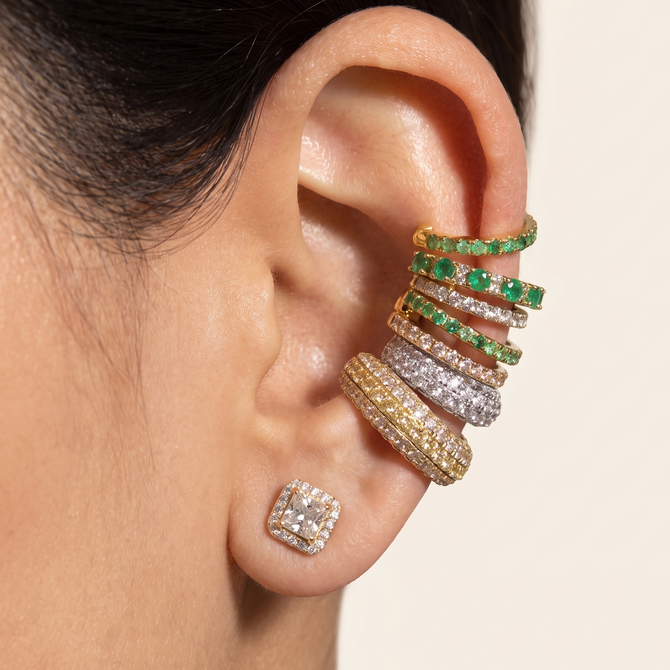
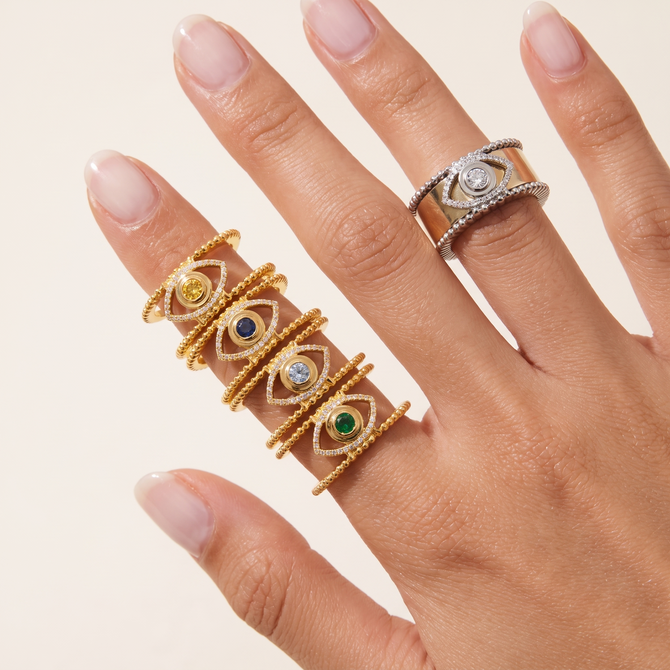
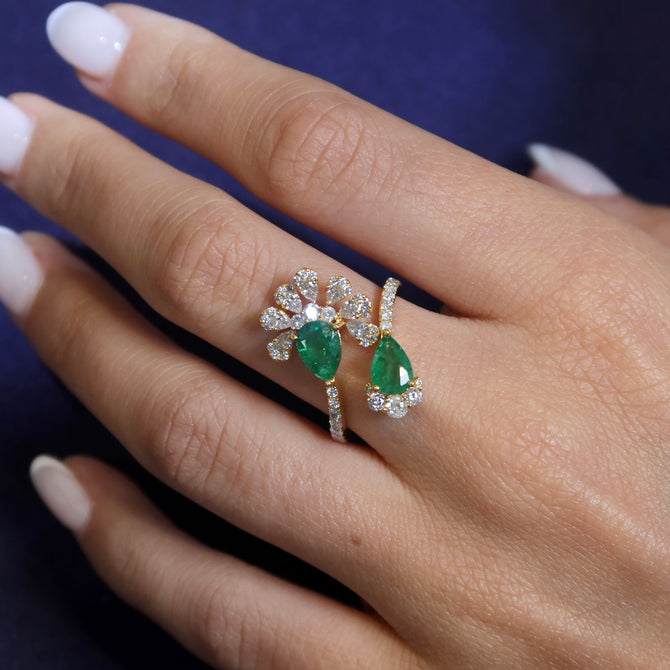
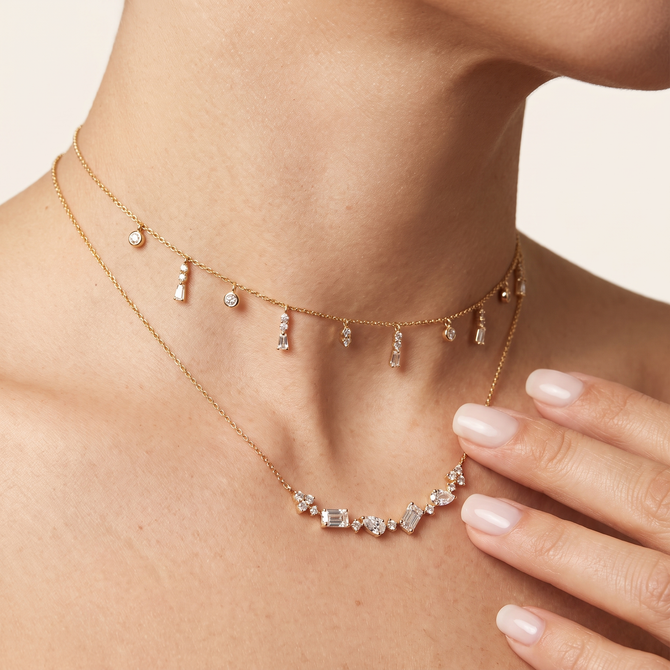
Natural Zambian emeralds. 18K solid gold. The Holly Emerald Necklace, Lumina Cascade, Aray Open Ring, and Reya Huggies — all available now, some with very few left.


