
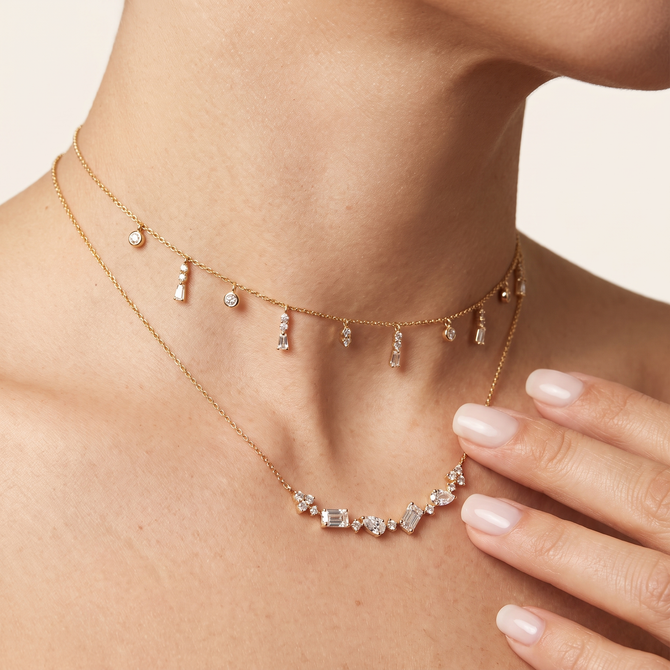
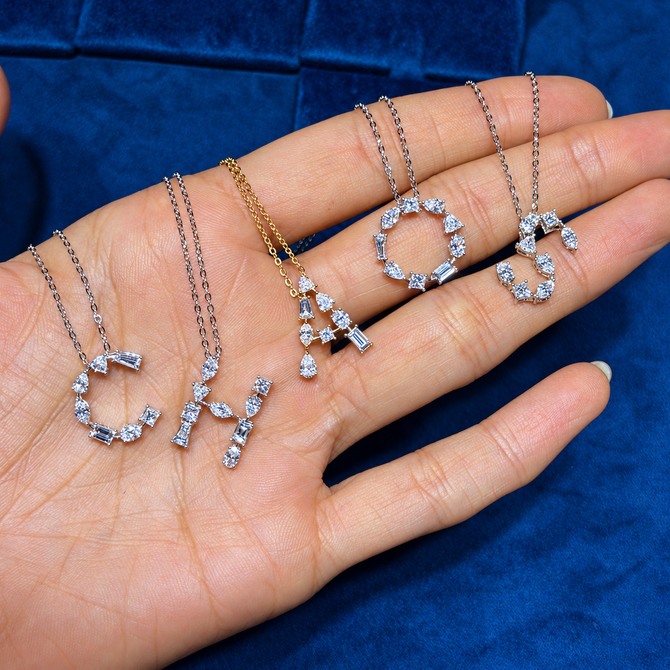
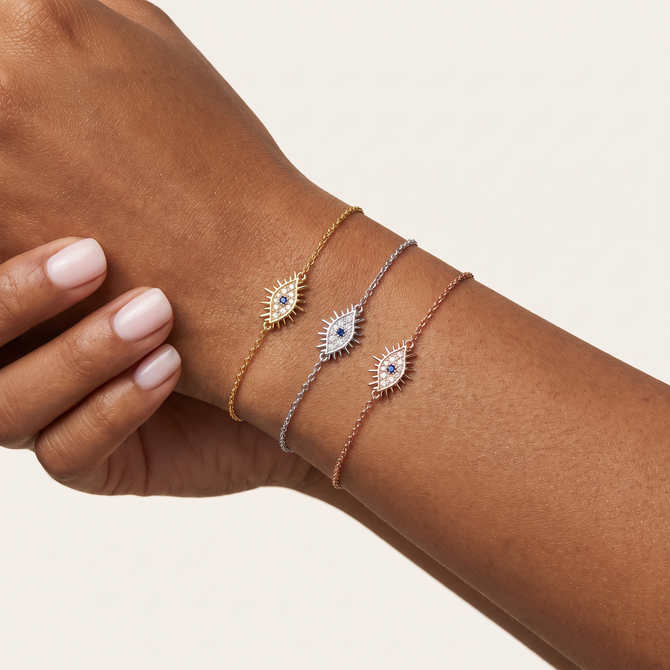
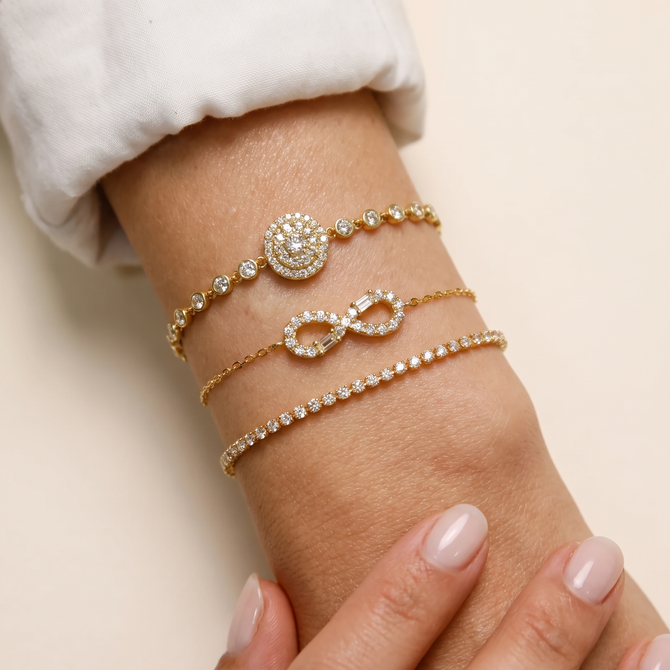

The Psychology of Jewelry Stacking: What's Actually Going On
Ask someone why they stack their rings and you'll usually get a styling answer: it looks good, it's trending. Underneath that, several distinct psychological forces are doing the real work — and most of them have nothing to do with sentimentality.
Status, But Not the Kind That Shouts
Economist Thorstein Veblen coined the term "conspicuous consumption" over a century ago to describe why people buy visibly expensive goods: not for the object itself, but to signal wealth and status to everyone watching. For most of jewelry's history, that meant one thing — bigger. A larger stone, a heavier chain, a single unmistakable statement piece.
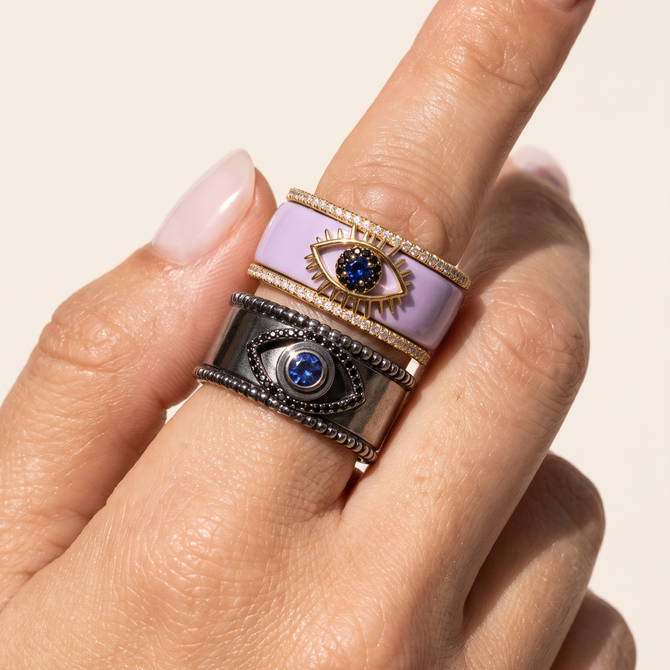
Stacking flips that logic. Instead of one loud signal, it sends several quiet ones. This tracks with a broader shift researchers and luxury analysts have been tracking toward what's often called "stealth wealth" — status pieces that only fellow insiders recognize, while looking understated to everyone else. A stack of well-made, well-chosen small pieces works the same way: someone who knows what 18K solid gold looks like against vermeil, or can spot a natural stone from across a table, reads an entire story in your stack that a casual observer never will. It's status built for a specific, in-the-know audience rather than broadcast to a whole room — a form of what sociologists call cultural capital: recognition earned through taste and knowledge, not just spend.

There's an evolutionary layer to this too. Costly signaling theory — the same framework used to explain why a peacock grows a tail that's expensive to maintain — suggests that visibly "costly" displays function as honest signals of underlying resources or quality. A stack, built up piece by piece over time, is in some ways a more costly signal than one purchase: it shows sustained taste and means, not a single splurge.
The Collector's Instinct
Here's the part that gets missed in most jewelry psychology writing: stacking behaves like collecting, not like shopping. A 2023 study of jewelry purchase motivations identified "collecting" as its own distinct driver — separate from buying for love, celebration, or investment. For a genuine collector, the curation itself is the project: deciding what belongs next to what, what's missing, what completes a set.
This matters because collecting runs on a different reward system than a single big purchase does. Neuroscience on collecting and repeat small purchases points to a pattern of variable reward; the anticipation of what might come next triggers more dopamine than actually owning the thing does. One large purchase gives you a single spike of satisfaction and then it's over. A stack, added to gradually, keeps that loop open, there's always a "next piece" to look forward to, which is part of why stacking feels less like a purchase decision and more like an ongoing hobby.

Self-Gifting and the Quiet Rebellion of Buying It Yourself
Fine jewelry carries an unusually strong cultural rule: it's supposed to be given, not bought. Engagement rings, anniversary gifts, milestone presents; for generations, the assumption was that a woman's finest pieces arrived from someone else, on someone else's timeline. Research on self-purchase behavior has found this expectation still lingers even now, with many women who happily spend on other luxury categories still hesitating specifically at fine jewelry, waiting for it to be given rather than claimed.
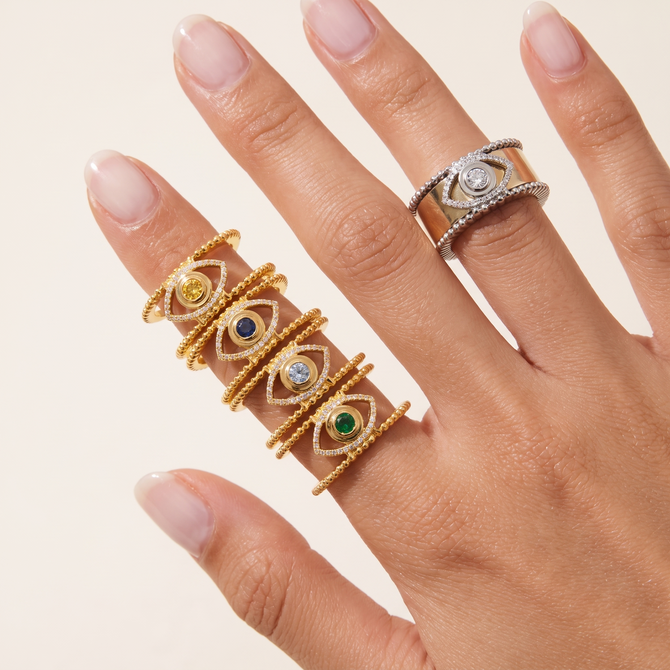
Self-gifting a piece; buying it for no occasion but your own, pushes directly against that rule. And the data suggests this resistance is fading fast, especially among younger buyers: recent research on Gen Z spending shows a marked comfort with frequent smaller self-purchases over rare, occasion-based big ones, treating a purchase as legitimate self-care rather than something that needs to be earned or excused. A ring stack, added to whenever you decide something is worth marking, is essentially that shift made physical; permission you no longer wait for someone else to give.

Why Stacking Needed Accessible Pricing to Happen
All three of these psychological drivers; quiet status signaling, the collector's instinct, self-gifting, share one practical requirement: they only work if you can actually afford to keep adding. Loud status signaling can survive one expensive purchase. Collecting and self-gifting cannot; they depend on being able to return, again and again, without each addition being a financial event.
This is a big part of why stacking has taken off specifically now, alongside the rise of factory-direct, middleman-free jewelry pricing. As a Factory to Cart brand, we design and sell 18K solid gold and natural diamond pieces without the retail markup layers that make traditional fine jewelry a rare-occasion purchase. That pricing model is what turns "I'll add to my stack when something feels right" from an aspiration into something you can actually act on.

Building Yours
If any of this resonates, the instinct to start isn't the problem — the instinct to finish is. A stack that's "collected" over months or years carries more of everything discussed above — status, curation, self-authorship — than one bought in a single afternoon.
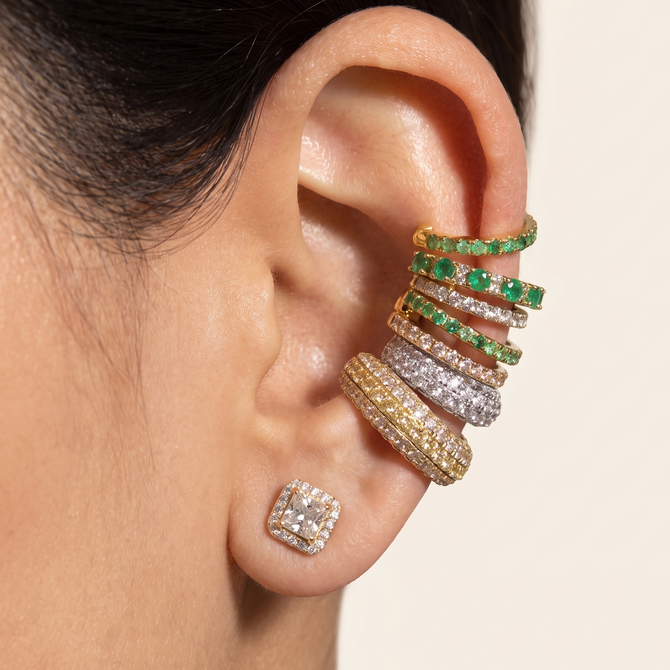
A natural starting point: one piece you'll wear daily, in a metal and stone that already feels like you. Our Under $1000 pieces are a low-pressure way to begin a ring or ear stack without committing to the whole story on day one; and every piece is designed to layer cleanly with whatever you decide to add next.
Curious about the emotional side of jewelry choice, beyond stacking specifically? We covered that in a companion piece: From Accessory to Identity: How Jewellery Shapes Your Personal Story.


